Is a High-Interest Digital Bank Safe in the Philippines? BSP Regulates
Sat, 09/26/2026 | Edited by Joaquin Guinoo
Seeing a digital bank offer higher savings rates can feel exciting—but it can also make you wonder: are high-interest digital banks safe in the Philippines, especially when the interest looks much better than what traditional banks usually offer?
The good news is that high interest rates alone don't determine whether a bank is safe. What matters is whether the bank is properly licensed and supervised by the Bangko Sentral ng Pilipinas (BSP), follows banking and consumer-protection rules, and offers eligible deposits covered by the Philippine Deposit Insurance Corporation (PDIC). The BSP recognizes digital banks as a formal bank classification and subjects them to its regulatory framework.
And when it comes to your deposits, PDIC currently provides insurance of up to ₱1 million per depositor, per bank for insured deposits in member-banks.
So before letting a tempting interest rate sweep you off your feet, luv, check what's behind it: proper BSP digital bank regulation, strong safeguards, and PDIC-insured deposits.
When choosing where to keep your savings, one of the first things to check is whether the institution is officially recognized by the country's banking regulator.
A BSP-licensed digital bank is a bank that has been authorized by the Bangko Sentral ng Pilipinas (BSP) to operate as a digital bank in the Philippines. Unlike traditional banks that primarily rely on physical branches, digital banks deliver financial products and services through digital platforms and electronic channels.
This means digital banks are not simply fintech apps or e-wallets. They are part of the formal banking system and must comply with BSP requirements designed to promote safety, stability, and consumer protection. This regulatory framework is an important part of building trust-building and compliance in digital banking.
Before a company can operate as a digital bank, it must go through the BSP's bank application and approval process. Applicants must submit required documentation and demonstrate that they meet regulatory expectations, including requirements related to ownership structure, governance, business model, risk management, and operational readiness.
The BSP also evaluates whether the proposed digital bank has appropriate systems and controls in place, including measures related to technology risk, cybersecurity, consumer protection, and anti-money laundering compliance.
This process helps ensure that only institutions capable of meeting banking standards are allowed to accept deposits from customers.
One important requirement for digital banks is maintaining sufficient capital to support their operations.
Under BSP guidelines, digital banks are required to maintain a minimum capitalization of ₱1 billion. This requirement helps ensure that digital banks have a stronger financial foundation to support their business activities, manage risks, and continue serving customers.
Capital requirements are one example of how BSP digital bank regulation works behind the scenes. While customers may primarily see the convenience of opening an account through an app, regulatory requirements help ensure that digital banks operate with proper safeguards.
So, when asking "are high-interest digital banks safe in the Philippines?", one of the key things to look for is whether the bank is BSP-licensed. A licensed digital bank follows regulatory standards that support trust-building, compliance, and responsible banking practices—giving customers more confidence as they save and manage their money digitally.
When it comes to your money, having a great interest rate is exciting—but knowing your savings have protection? That's where the real peace of mind comes in. 💜
One of the key things that can help answer "are high-interest digital banks safe in the Philippines?" is checking if your deposits are covered by the Philippine Deposit Insurance Corporation (PDIC).
PDIC protects depositors by providing insurance coverage for eligible deposits in banks supervised by the Bangko Sentral ng Pilipinas (BSP). As of March 15, 2025, the maximum deposit insurance coverage is ₱1 million per depositor, per bank.
Think of it as an extra safety net for your savings. Just like bringing an umbrella before a rainy day, deposit insurance helps provide protection in case a bank is closed by authorities.
PDIC insurance generally covers eligible deposits such as savings accounts, checking accounts, and time deposits maintained with a bank. Coverage applies to deposits under the depositor's name, subject to PDIC rules and limitations.
Example:
Let's say you have:
Your total deposits of ₱900,000 may fall within the ₱1 million coverage limit, subject to PDIC rules.
However, PDIC insurance does not cover investments such as stocks, bonds, or other products that are not considered deposits.
This is why checking if your digital bank is PDIC insured is an important part of making an informed choice. Along with BSP supervision and strong security practices, deposit insurance adds another layer of trust-building and compliance in digital banking.
A digital bank may not have a branch you can walk into—but that doesn't mean security takes a back seat.
Behind every tap, transfer, and balance check are layers of technology and controls designed to help keep customer funds and information protected. This is where compliance and cybersecurity come together to create a safer digital banking experience.
Here are some of the ways digital banks protect your money:
Encryption works like a digital lockbox. It converts sensitive information into protected data that can only be accessed by authorized systems.
For example, when you check your account balance or send money through your banking app, encryption helps protect your information while it moves between your device and the bank's systems.
A password is important—but adding another layer of verification makes account access more secure.
Multi-factor authentication (MFA) requires customers to provide additional verification, such as an OTP or biometric authentication, before completing certain actions.
Example:
Someone may know your password, but without your registered device or OTP, they may still be unable to access your account.
Digital banks also use risk management systems to help identify suspicious transactions and protect customers from fraud.
These controls may include transaction monitoring, fraud detection tools, and security reviews designed to identify unusual account activity.
At the end of the day, a safe digital banking experience is built on more than just attractive interest rates. It comes from a combination of BSP digital bank regulation, PDIC insured deposits, strong cybersecurity practices, and continuous compliance.
A high interest rate can be exciting—who doesn't want their money to work harder? 💜 But before opening an account, it's always a good idea to do a quick safety check.
A trustworthy digital bank should make it easy for customers to understand who they are, how they operate, and what protections are in place. Here are a few red flags to watch out for:
One of the first things to check is whether the institution is authorized to operate as a bank in the Philippines.
Banks that accept deposits from the public must be licensed and supervised by the Bangko Sentral ng Pilipinas (BSP). The BSP maintains a list of authorized financial institutions to help consumers verify whether a bank is operating under its supervision.
Example:
If an app promises "guaranteed savings growth" but you cannot find it among BSP-supervised institutions, take a closer look before depositing your money.
A good interest rate can be a great opportunity—but be careful with offers that promise unrealistic or guaranteed returns without explaining how they work.
Banks should clearly communicate product terms, fees, and conditions so customers can make informed decisions. BSP's consumer protection framework requires financial institutions to provide fair, transparent, and responsible treatment of customers.
Example:
A legitimate savings product may explain its interest rate, requirements, and applicable conditions. Be cautious of platforms asking you to "deposit now" while avoiding questions about how your money is protected.
Digital banking relies on technology, so security should always be part of the conversation.
Look for signs that a digital bank takes account protection seriously, such as secure login methods, transaction verification, and customer alerts.
The BSP requires banks to establish information security management practices to protect information assets and manage technology-related risks.
Example:
Features like biometric login, OTP verification, and transaction notifications are small steps that add extra protection to your everyday banking activities.
A legitimate bank should clearly communicate whether customer deposits are covered by the Philippine Deposit Insurance Corporation (PDIC).
Eligible deposits in PDIC member banks are insured up to ₱1 million per depositor, per bank, subject to PDIC rules.
Example:
Before opening an account, check the bank's official channels and confirm whether deposits are covered by PDIC insurance.
A safe banking relationship is built on trust—and trust comes from transparency.
Be cautious if a financial platform:
Good trust-building and compliance mean customers should feel informed, supported, and confident when managing their money.
Choosing a digital bank is not just about finding the highest interest rate. It's about finding a bank that combines competitive products with proper regulation, security practices, and customer protection.
So, when typing "are high-interest digital banks safe in the Philippines?", remember: a little checking today can help you make a more confident choice tomorrow. 💜
Choosing where to keep your savings is a big decision. After all, your money deserves a home that is not only convenient, but also built on trust. 💜
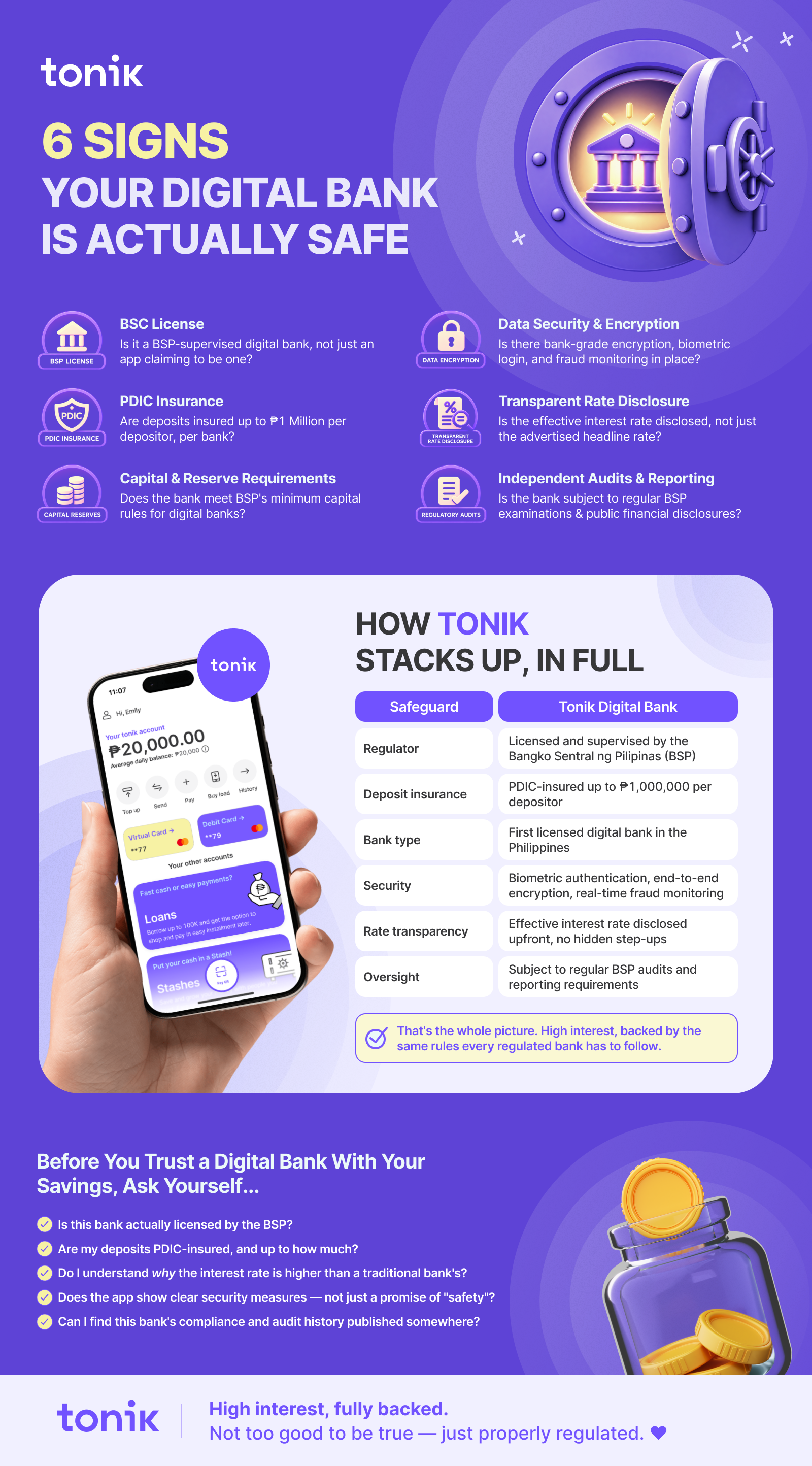
At Tonik, security is built into the way we operate—from our regulatory foundation to the technology that supports your everyday banking needs.
Tonik Digital Bank, Inc. is regulated by the Bangko Sentral ng Pilipinas (BSP) and operates under a digital bank license issued by the BSP.
Being BSP-regulated means Tonik operates within the Philippine banking framework and follows regulatory requirements designed to support safe and responsible banking practices.
In simple terms: behind the easy app experience is a licensed bank that follows banking standards—not just a platform where you store money.
Another important layer of protection? Your deposits.
Eligible deposits with Tonik are insured by the Philippine Deposit Insurance Corporation (PDIC) for up to ₱1 million per depositor, subject to PDIC rules.
This means your savings, Stashes, and Time Deposits are covered under PDIC's deposit insurance framework, giving you added confidence as you grow your money.
Example:
Whether you're setting aside your emergency fund, creating a savings goal, or growing your money through a Time Deposit, knowing your eligible deposits have insurance coverage adds an extra layer of peace of mind.
Because Tonik operates digitally, protecting your account goes beyond keeping money in a vault—it means protecting every interaction you make through the app.
Digital banks use security controls such as secure authentication methods, technology safeguards, and risk management processes to help protect customer information and transactions. These practices are part of the broader technology and cybersecurity expectations set by the BSP for banks.
Example:
When you log in, move money, or manage your savings, security measures help make sure that it's really you accessing your account.
A safe banking relationship starts with transparency.
From understanding interest rates and product features to knowing how your deposits are protected, customers should always have clear information before making financial decisions.
That's why checking a bank's license, deposit insurance coverage, and security practices is an important part of choosing a digital banking partner.
Because when it comes to your savings, trust-building and compliance go hand in hand.
So, are high-interest digital banks worth considering?
The answer depends on what you value in a banking experience.
A higher interest rate can help your savings grow faster—but the interest rate should only be one part of the decision. A safe digital banking choice should also come with:
When evaluating "are high-interest digital banks safe in the Philippines?", the most important question is not just "How much can my money earn?" but also "Who is protecting my money?"
Digital banks have changed the way Filipinos save by making banking more accessible, convenient, and available right from your phone. With proper regulation and security measures in place, customers can enjoy the benefits of digital banking while making informed choices.
At Tonik, we believe saving money should feel simple—not stressful. 💜
Because growing your savings is exciting. Knowing they're protected? That's even better.